Ensete ventricosum ‘Maurelii’ is a monstrously sized plant that adds an exotic touch to any garden.
In this article I will show step by step how to propagate Ensete ventricosum ‘Maurelii’ (Red Abyssinian Banana Tree or Ethiopian banana) by division.

This plant has large bright green leaves and the red of its veins and the underside of the leaves makes it a very decorative plant.

It is a perennial palm-like plant that produces small (inedible) banana-like fruits.
In this article
How to grow Red Abyssinian Banana Tree
It must be grown in full sun or partial shade in an area sheltered from the wind that may destroy its leaves.
The soil must be rich in humus as they are greedy plants. Needs winter protection with temperatures below 5°C (41°F).

In geographies with cold winters (as in my case), these plants are grown in pots so that they can be moved under cover in the cold months.
These types of plants – Ensete ventricosum, Agaves and even Strelitzia (Strelitzia reginae) – are moved to the garden, patio or terrace in the warm months where they create a dramatic, tropical effect.
Ensete propagation step by step
I’ve had this plant for a few years, and when I read about its propagation method, I had to try it, even though I knew I was risking a valuable plant.
Unlike other propagation methods, where the survival of the mother plant is assured, in this case, as you will see, we risk losing everything.
Let’s do it?
Dividing Ensete clump
It’s early spring and I’m going to get my Ensete from the shelter where she spends the winters.

I cut the foliage.

And remove the plant from the pot.

With a very sharp knife I cut the aerial part of the plant as shown in the following images.


With a shovel, I cut the root ball to the same size as the top.

Now we can handle our plant easily.
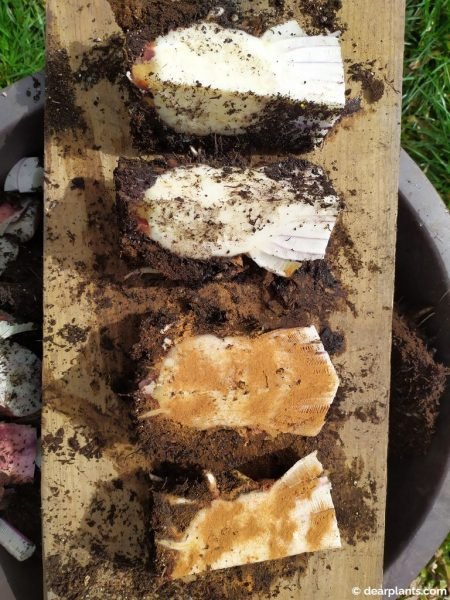
With the same knife, I cut the Red Abyssinian Banana Tree clump, first into 2 parts. I cut exactly through the center of the plant.


I have two equal parts. Right now I could plant them, but I’m going to be ambitious and split even more.


I cut each half, again by the center, and I have four equal parts.
Trying cinnamon
At this point I decided to do one more experiment. I have been reading about the use of cinnamon in fungal prevention and even as a rooting hormone and decided to give it a try.
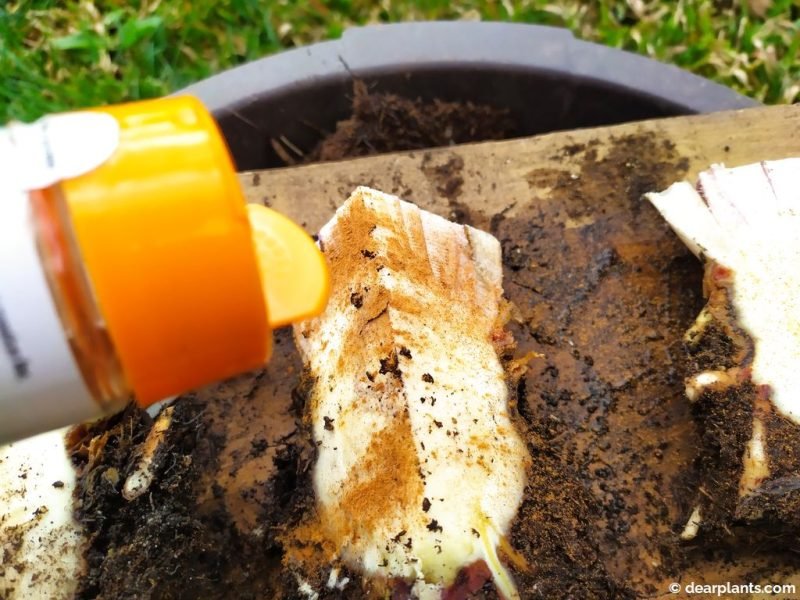
I applied cinnamon in 2 parts, and left the other two without any treatment to see if that makes any difference.
Planting each piece of banana tree
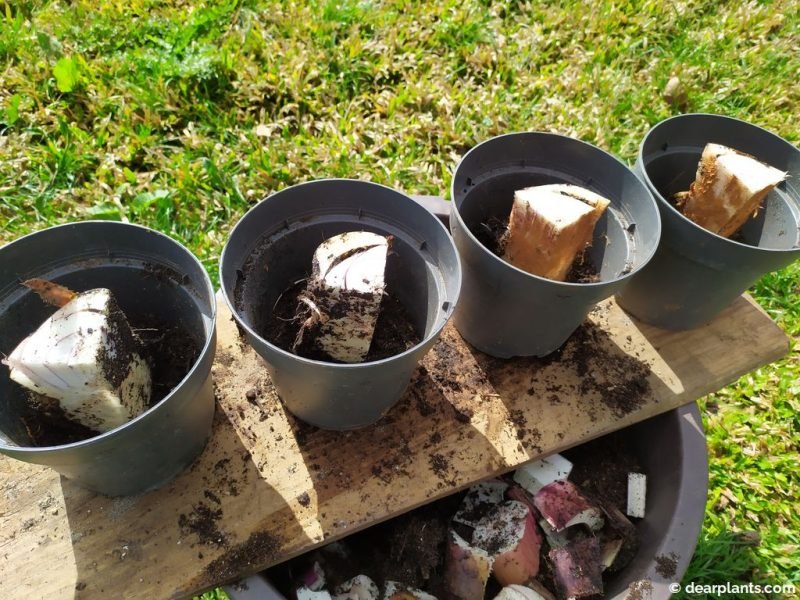
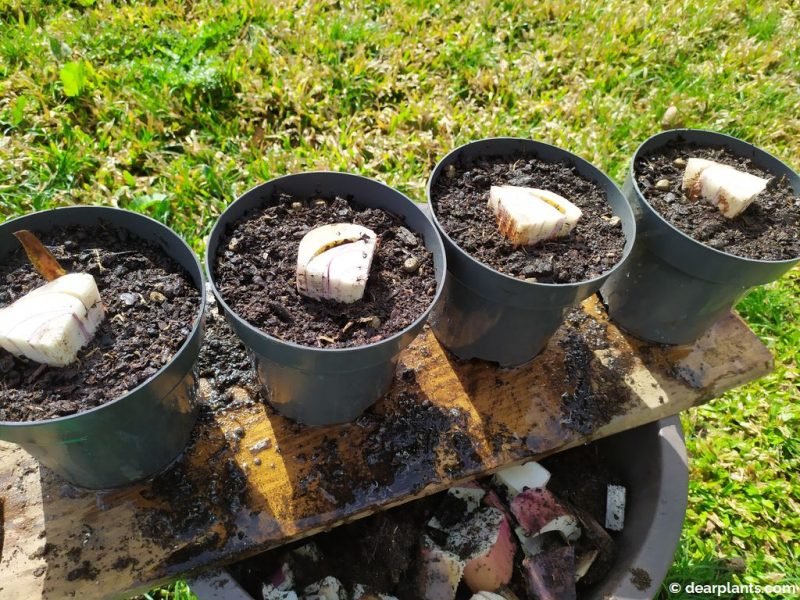
Then I planted every piece of my Ensete in a pot. You don’t need to use huge pots, it’s important that the compost used is fresh and that it drains well, to avoid fungus and rot.
Water the pots
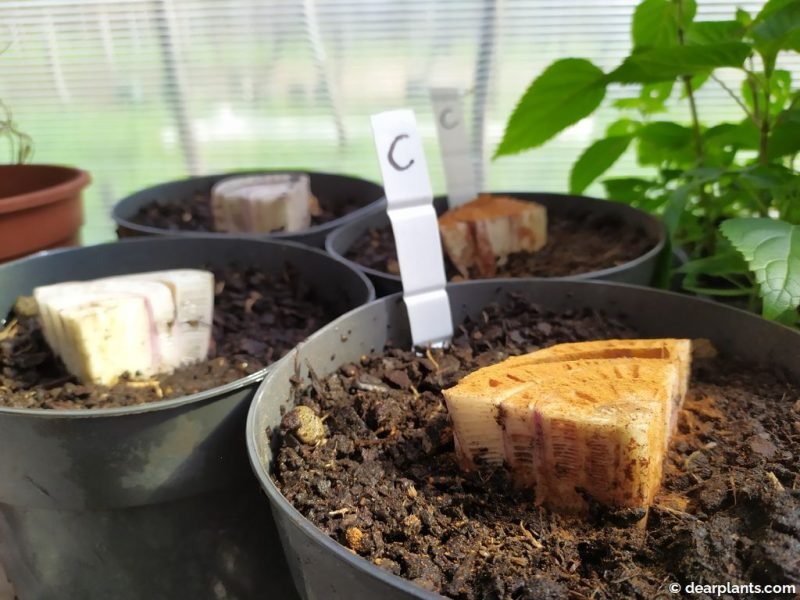
I watered each pot, put a label marking the pots with cinnamon and put it back in the greenhouse in a bright place.
Ensete propagation results
After 6 weeks of inspecting the pots almost daily and guaranteeing that the compost doesn’t dry out completely, I’m starting to see signs that something is going on.
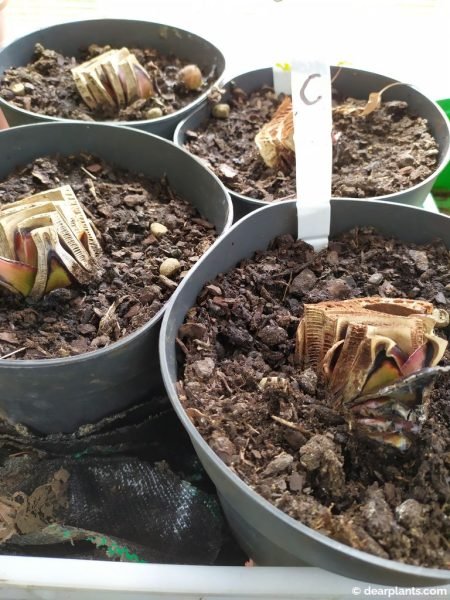
The clump layers begin to open.
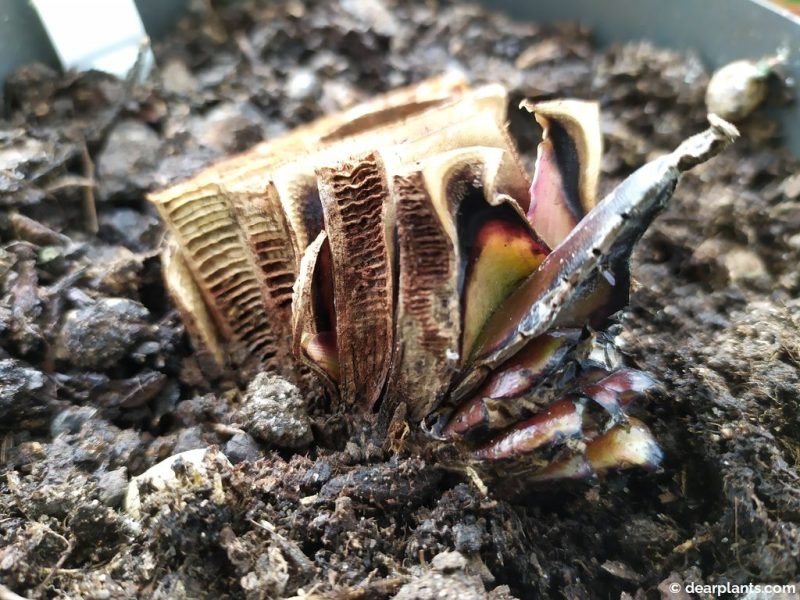
And eight weeks later, a callus has formed, where new shoots will probably start to sprout.
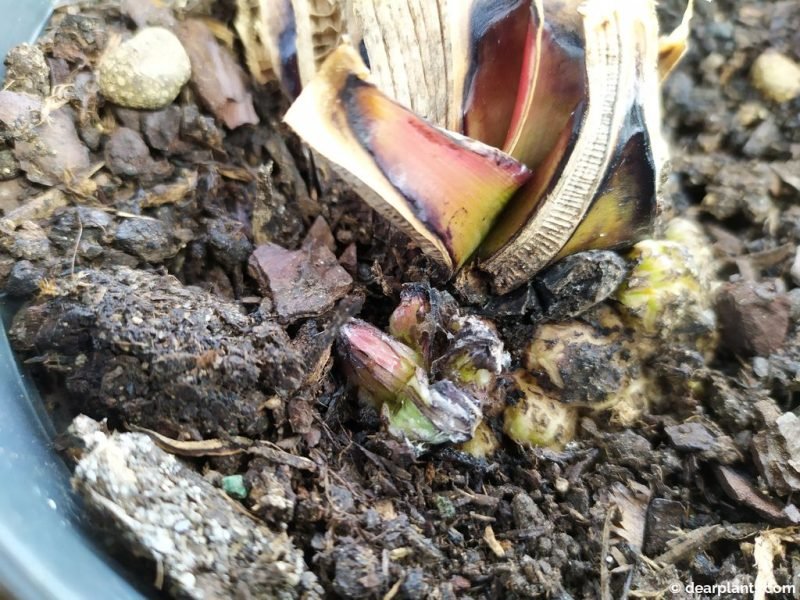
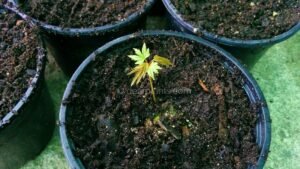
10 weeks after the division, I can already see leaves emerging at the base of the plants… what a joy and, at the same time, what a relief!
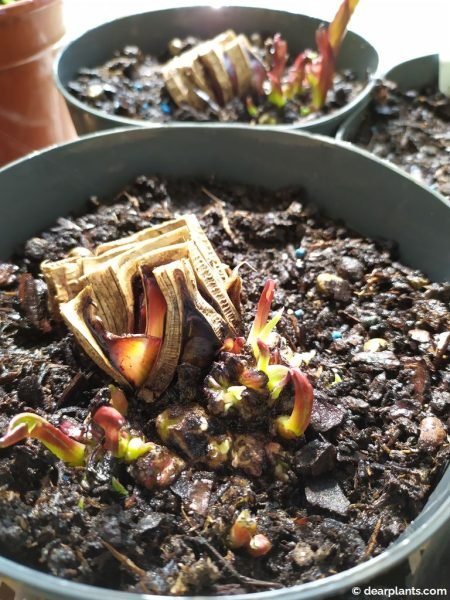
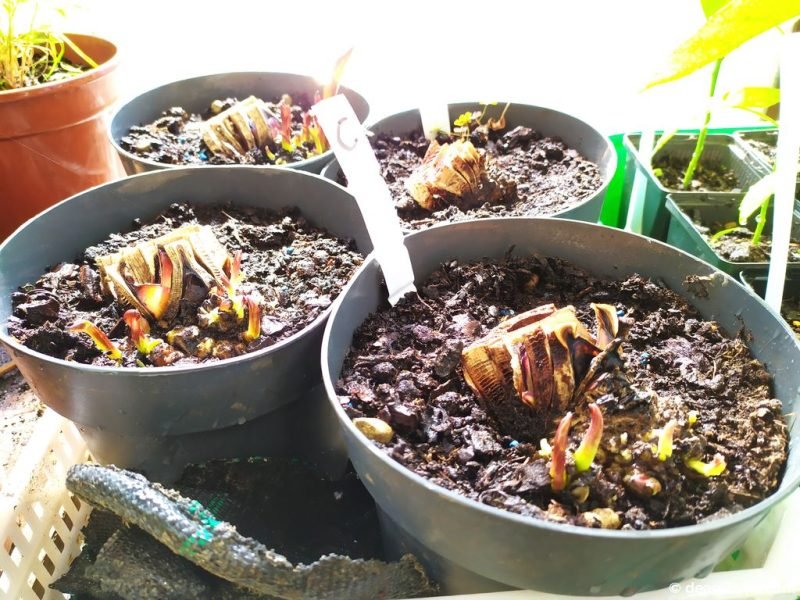
From here the temperatures are really heating up as we are approaching summer. I place the pots outside and the shoots grow quickly!
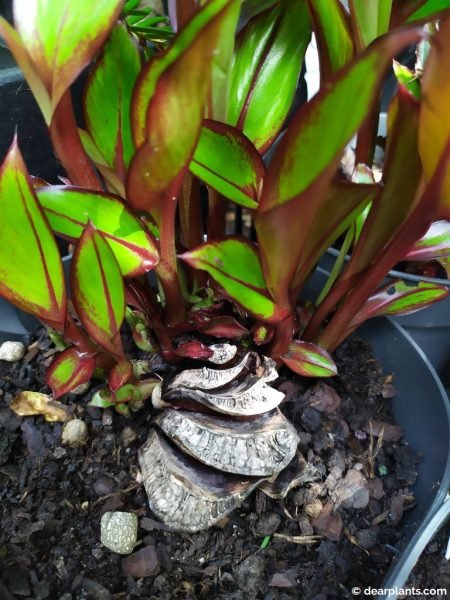
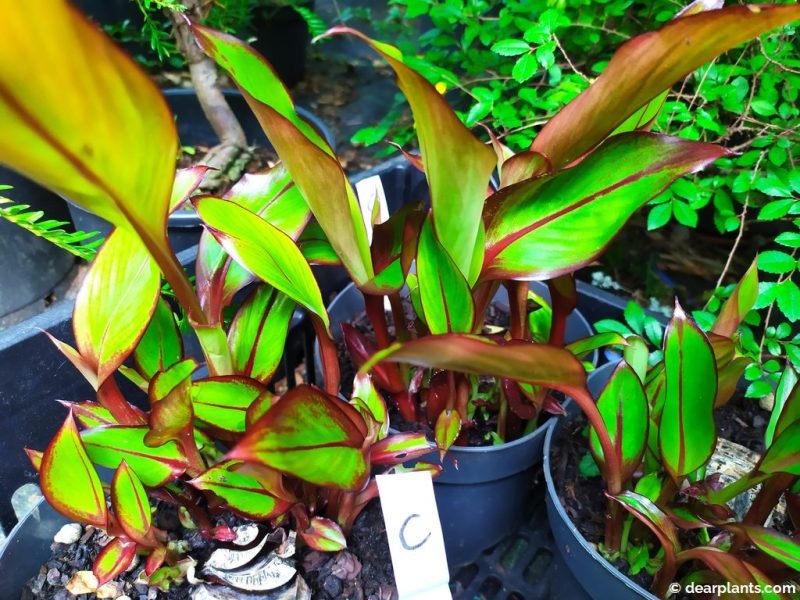
Did cinnamon make any difference?
At this point, 3 pots grown equally and one did not… the one that didn’t sprout was a cinnamon treated. This is not scientifically prove, but from this experience, at least I can say that cinnamon didn’t prove to improve anything.
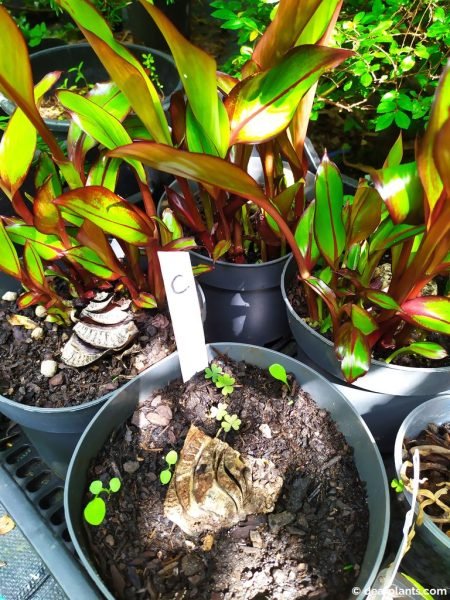
In the next update of this article, hopefully I will add the images of splitting the various shoots to individual pots… follow Dear Plants on social media to receive notifications of the update of this article.
Please use the comments section below to post any comments to this guide on how to propagate Ensete ventricosum ‘Maurelii’ (Red Abyssinian Banana Tree or Ethiopian banana) by division. Thank you!