

Common oak (Quercus robur) is a tree that can grow higher than 15m tall and wider than 8 metres wide. In this growing guide we’ll learn the cultivation details and how to plant Common oak (Quercus robur).
This plant has several common names including: common oak, English oak, aac, black oak, French oak, pedunculate oak, Polish oak or Slavonian oak.
This is a deciduous plant that takes 20-50 years to reach full maturity.
In this article
Plant profile
Common name: common oak, English oak, aac, black oak, French oak, pedunculate oak, Polish oak, Slavonian oak
Scientific name: Quercus robur
Plant type: Trees
Habit: Spreading / Branched
Height: Higher than 15m
Spread: Wider than 8 metres
Foliage: Deciduous
Sunlight: Full Sun, Partial shade
Soil: Chalk, Clay, Loam, Sand
Moisture: Moist but well drained, Well drained
Planting type: Low Maintenance
Seasonal colors
| Season | Stem | Foliage | Flower | Fruit |
|---|---|---|---|---|
| Spring | ||||
| Summer | ||||
| Autumn | ||||
| Winter |
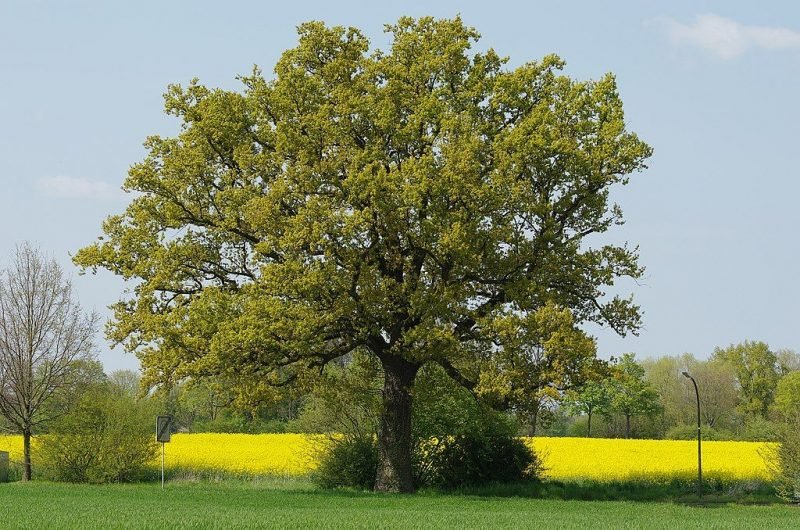
Trees are essential plants in gardens, large and small, with their sculptural presence.
In terms of design, they add height, structure and interest all year round with attractive flowers, foliage, fruits and trunks.
In addition, they provide home and a food source for birds and other wildlife.
How to plant
In this section we will learn how to plant Common oak (Quercus robur), know its needs in terms of soil, watering and sun exposure.
Soil
Common oak (Quercus robur) is a plant that adapts to all types of soils, chalk, clay, loam or sand.
-
The chalky soil is pale and contains chunks of calcium-rich rock. It is a fertile and well-draining soil, almost always alkaline.
-
Clay soil is composed of more than 25 percent clay particles. These particles have a high moisture holding capacity and the soil is heavy to dig and can be waterlogged in winter (dry in summer).
-
The loam soil is dark, rich in organic matter but balanced in minerals. It offers the best of all worlds, retaining enough water for the plants, but allowing excess moisture to drain away. This is the most desired type of garden soil, perfect for most plants.
-
Sandy soil is light, porous and very easy to drain. It is a soil poor in organic matter and nutrients. It is composed of relatively large mineral particles that allow water to drain quickly.
It is not very sensitive to soil acidity or alkalinity and grows well in soils with pH acid, alkaline or neutral.
Regarding drainage, Quercus robur likes to grow in moist but well drained or well drained soils.
Sunlight
Common oak (Quercus robur) is a plant that should be grown in full sun or partial shade positions.

Cultivation profiles – Growing Common oak (Quercus robur) – Robert Flogaus-Faust, CC BY 4.0, via Wikimedia Commons


